
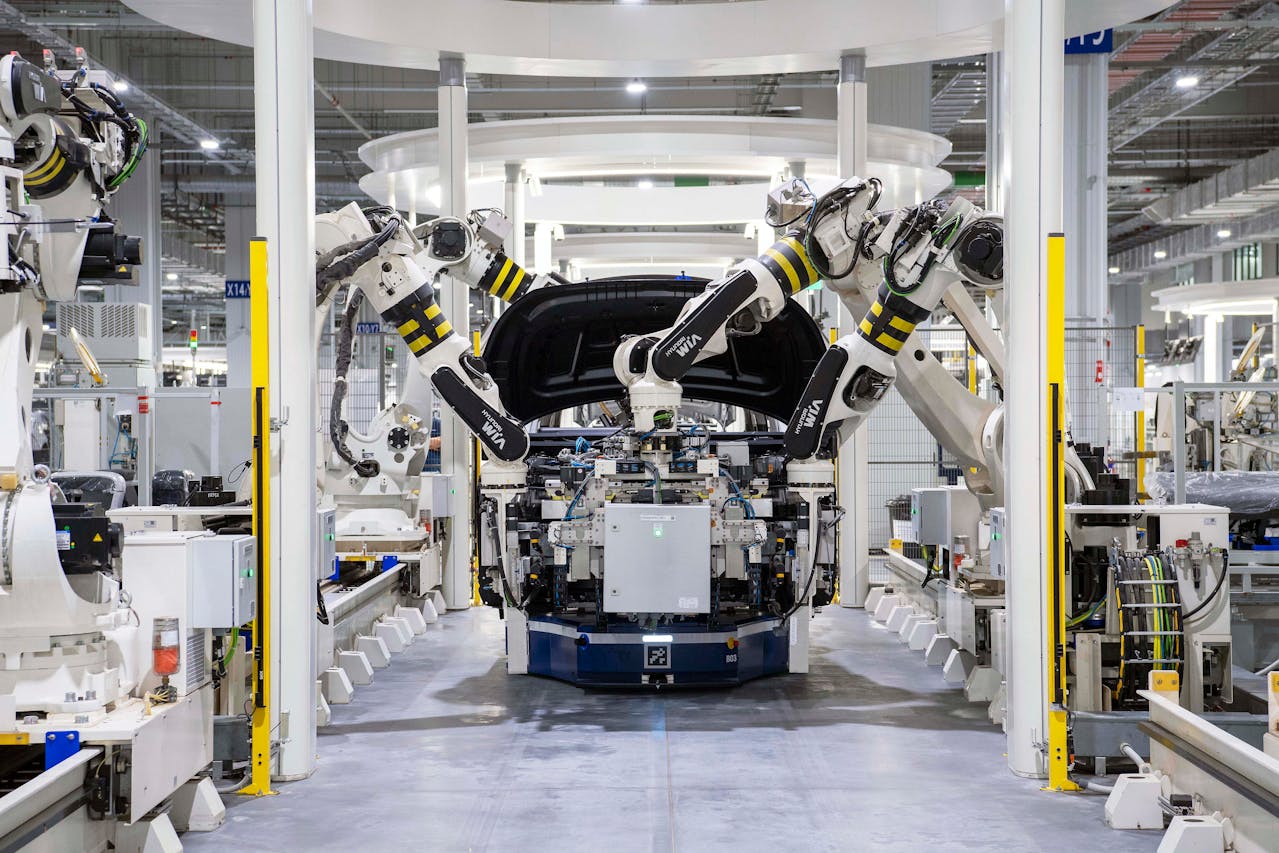
In recent years, global automotive supply chains have faced unprecedented pressures.
From semiconductor shortages and transport capacity fluctuations to geopolitical uncertainties, traditional Just-In-Time (JIT) manufacturing systems are being forced to adapt.
Supply chain managers must now make precise decisions balancing speed, cost, and risk—each choice potentially affecting production lines and delivery schedules.
Lean Production: Efficiency vs. Fragility
JIT manufacturing minimizes inventory, improving cash flow and warehouse efficiency.
However, low inventory also means:
-
Minimal buffer for delays
-
Any critical component disruption can halt an entire production line
In this environment, supply chain speed and reliability have become as crucial as cost control.
Global Sourcing Lengthens Supply Chains
A single vehicle involves thousands of parts. Critical components often have:
-
Single-source suppliers
-
High technical barriers
-
Low substitutability
-
Cross-continental procurement
Longer chains improve efficiency but increase risk. A delay at any node can trigger a chain reaction, potentially impacting the entire production schedule.
Uncertainty Has Become the New Normal
Recent industry challenges include:
-
Capacity constraints
-
Route adjustments
-
Geopolitical changes
-
Disrupted component supply
Companies now view supply chain management not just as cost optimization, but as risk control.
The rising demand for urgent air freight reflects this shift.
The Role of Urgent Air Freight in Automotive Supply Chains
Urgent air freight is no longer an occasional fix—it is a risk management tool.
Common solutions include:
-
OBC (On-Board Courier): Ideal for critical components with high line-stop risk
-
NFO (Next Flight Out): Suitable for medium-to-high urgency shipments requiring direct flights
-
Charter Flights: Ensures large volumes of critical components reach destination on time
The core value lies not in speed alone, but in ensuring production continuity and minimizing line-stop losses.
What Automotive Companies Look for in Logistics Partners
Companies increasingly seek partners with:
-
Reliable air route access
-
Hour-level emergency response
-
Cross-region coordination capability
-
Experience handling high-value automotive components
Baiyue Logistics specializes in urgent air logistics, providing structured solutions in OBC, NFO, and charter services.
Our capabilities include:
-
Rapid, hour-level response
-
Multi-route contingency planning
-
Cross-continental coordination
-
End-to-end shipment visibility
This ensures critical parts arrive on time, helping manufacturers maintain production continuity under uncertain conditions.
Future Trends: Balancing Efficiency and Resilience
Automotive supply chains are unlikely to return to high-inventory models, but resilience and emergency readiness will be long-term priorities.
Emerging trends:
-
Multi-path, multi-route logistics as standard
-
Data-driven decision-making and risk prediction systems
-
Urgent air freight as a standard module of supply chains, not an occasional tool
Balancing speed, cost, and risk will determine competitiveness in complex supply chain environments.
Conclusion
In an era of rising supply chain uncertainty, urgent air freight has shifted from an auxiliary service to a core safeguard.
Success depends on:
-
Accurate risk forecasting
-
Rapid emergency response
-
Multi-solution, multi-modal transport networks
Baiyue Logistics helps automotive and high-end manufacturing companies ensure reliable urgent air logistics, maintaining supply chain continuity even in high-pressure situations.